Industry Insights
How Global Supply Chain Disruptions Affect Small Businesses
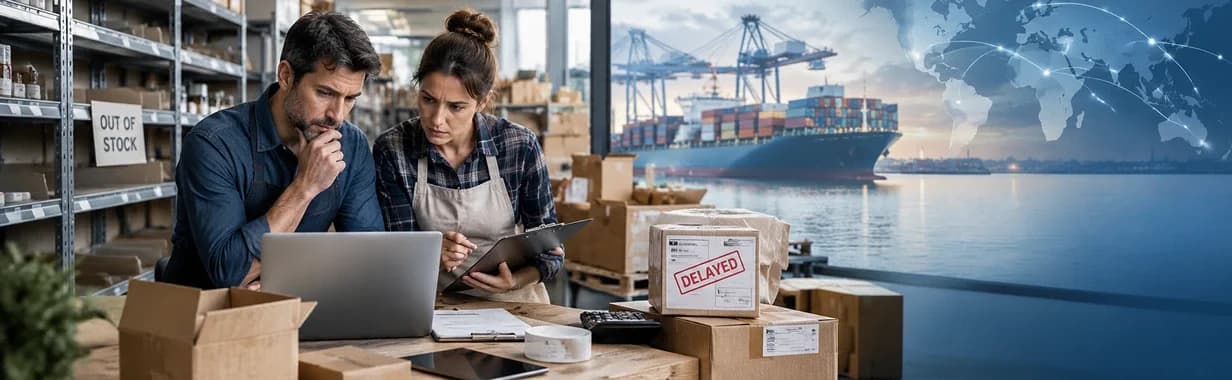
Recent developments in modern business show how connected global business really is. Even something as simple as a minor problem in a port, a geopolitical incident or even a natural disaster in a particular area can create ripples felt all around the world. Multinational companies with sufficient funds and vendor diversification are generally able to cope with these changes.
Knowing how global supply chain disruptions impact small businesses and how owners of such businesses can react is vital in today’s dynamic environment.
What Are Supply Chain Disruptions?
It is important to first define what supply chain disruption entails before proceeding to discuss its impact on small business owners.
A supply chain disruption is basically any unexpected occurrence that prevents or seriously changes the way in which products, materials, and services move from production to consumption. Such disruptions may be caused by various issues such as:
- Geopolitical instability and trade conflicts
- Adverse weather conditions and climatic irregularities
- Congestion at ports and shipping delays
- Labour shortages and closure of manufacturing facilities
- Hacking of logistics systems
If at any point the connection between the chain gets disrupted, the movement of the inventory gets interrupted.
The Impact of Supply Chain Disruption on Small Businesses
Whereas large corporations might be able to accommodate stock deficits or even reconsider shipping costs, smaller organisations do not enjoy such freedom. The impact of supply chain disruption in small organisations can be seen in various important business aspects, which include:
1. Increases in Operational and Inflationary Costs
When there is an influx in the logistics system, costs of transport, surcharges for fuel, and prices of raw materials become elevated. In small businesses, such companies cannot benefit from volume purchases or receive preferential treatment for transport services from the logistics provider. This will consequently lead them to incur increased wholesale costs that can either be absorbed or transferred to consumers.
2. Inventory Shortages and Out-of-Stock Items
For smaller, localised manufacturers or online stores, being without important inventory items can be fatal. The unpredictable delivery time makes it very difficult to plan for inventory. Not only do they lose revenue, but they also drive away their loyal customers, who will shift to bigger companies with consistent inventories.
3. Impact on Cash Flow and Revenue Fluctuations
Products being transported can be said to be tied-up funds because small firms are forced to pay their bills, such as rental expenses, salaries, and general expenses, despite the delays. This reduces the cash flow that could otherwise be used to pay employees or market the product before the sales season arrives.
4. Stress on Customer Relations and Brand Image
The customer demands that their order arrives quickly and is readily available for purchase. In cases where the delivery is delayed because of supply chain disruptions, the consumer does not fault the international shipping companies but rather the local supplier.
Strategic Solutions: Managing Supply Chain Disruptions
Even though small businesses do not have much influence on global transportation networks or policies, that does not mean they have to be defenceless against unforeseen shipping delays and shortages of stock.
These are the important techniques for managing supply chain disruptions:
1. Suppliers Diversification
Depending on one supplier or one location for sourcing components is very risky for any business. It is necessary to have multiple suppliers, meaning establishing relationships with other suppliers from different parts of the country or even closer suppliers. Although domestic supplies will cost a little bit more at first, the transportation risk will be smaller.
2. Get Out of the Ultra-Lean Mindset
For many years, “Just-In-Time” inventory management was perceived to be the ideal practice in terms of efficiency. Yet, the current volatile market conditions have revealed the weaknesses inherent in ultra-lean inventories. A “Just-In-Case” inventory strategy can help ensure your business stays open despite local shipping disruptions or global trade disruptions.
3. Use Modern Predictive Technologies and AI CRM Solutions
Understanding customer requirements and inventory needs becomes very important during resource-constrained conditions. And this is where an AI CRM (Customer Relationship Management) solution becomes very significant.
This is because an advanced AI CRM system not only stores contact details but also studies the previous sales data, understands the purchasing patterns of customers and accurately predicts future inventory needs. Using predictive analytics helps the business owner order in advance, understand purchasing patterns even before the stocks run out and notify customers about it.
4. Keep Channels of Communication Open with Vendors and Consumers
Transparency fosters trust over the long term. Keep lines of communication open with important vendors in order to receive advance notice of potential increases in lead times or material shortages. You should also keep channels of communication open with consumers. If there are delays in product lines due to supply chain disruptions, let the buyers know in advance.
Also Read: Delivery Route Optimization: Benefits for Modern Businesses
Choose TradeOne CRM for a Smooth Supply Chain Process
Global supply chain disruptions are a big threat to independent businesses but, at the same time, give an opportunity for creating resilient systems. Through recognizing what are supply chain disruptions, assessing the system risks involved, and employing future-thinking solutions like vendor diversification, safety stock management, and predictive technologies like AI CRM, small business owners will be able to cope with market instability.
TradeOne CRM helps small businesses navigate supply chain disruptions by providing real-time inventory visibility and predictive demand forecasting, empowering businesses to mitigate delays and maintain seamless customer communication.
Frequently Asked Questions
A supply chain disruption is an unexpected event that causes a delay in the movement of products or raw materials. This can happen due to irregularities in the weather, shortages of labour, geopolitical issues, or clogged ports.
Topics
Book a Demo
Talk to our experts
About the Author