Tutorials & Guides
Delivery Management for Distributors: How to Reduce the Impact of Delayed Deliveries
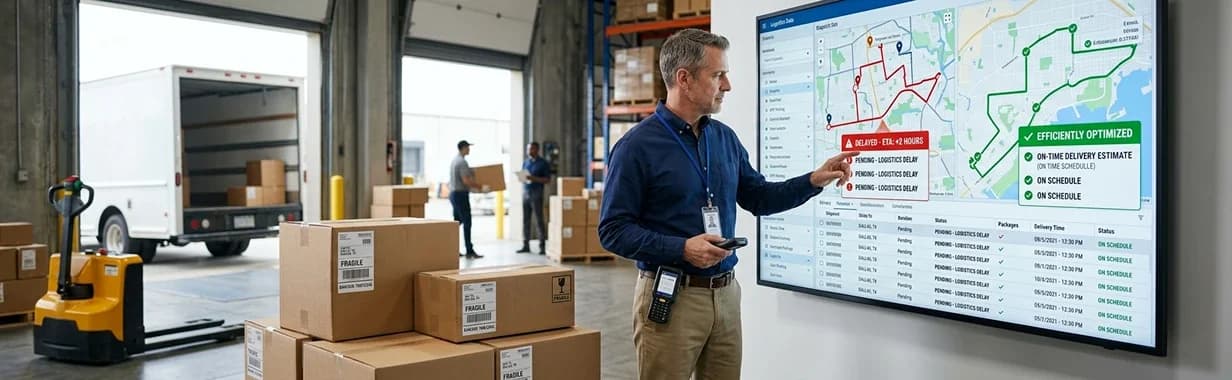
A delivery is supposed to be the easy part: order packed, truck loaded, customer informed, done. Then the driver gets stuck in traffic, the customer says nobody called, the warehouse discovers an item is missing, and your sales team starts making calls to figure out what went wrong. Suddenly, one late shipment has become everyone’s problem.
For distributors managing multiple orders, routes, drivers, and customers, delivery delays are almost impossible to avoid completely. What matters is how quickly the team spots a delay, understands the reason, updates the customer, and takes action.
That’s where delivery management earns its place in the daily workflow. With the right process and technology, distributors can keep an eye on deliveries, catch potential issues early, coordinate their teams, and give customers accurate updates instead of vague promises. In this guide, we’ll look at practical ways distributors can handle delayed deliveries without turning every late shipment into a fire drill.
Why Do Delivery Delays Happen in Distribution?
A delayed delivery is rarely caused by one big problem. More often, several small issues pile up until the promised delivery time slips.
Poor Route Planning
Too many delivery stops, inefficient routes, road restrictions, or unexpected congestion can push one late stop into a chain of delayed deliveries. Without proper route planning, drivers may spend more time on the road than expected.
Inventory and Order Issues
Sometimes the delay starts before the vehicle leaves. Incorrect stock information, incomplete orders, picking delays, or last-minute order changes can hold up dispatch and disrupt the delivery schedule.
Communication Gaps
When sales teams, warehouse staff, drivers, and customers rely on separate calls, messages, or spreadsheets, important updates can easily get missed. A customer may be expecting an order while the warehouse already knows it is running late.
Lack of Real-Time Visibility
If distributors discover a delay only after the expected delivery time has passed, their options become limited. Real-time visibility helps teams spot late shipments earlier, update customers, and take corrective action.
Together, these issues show why effective service delivery management needs more than simply sending products from A to B. Distributors need a clear process for delivery route optimization, tracking deliveries, sharing updates, and responding quickly when plans change.
What Should Distributors Do When a Delivery Is Delayed?
A delayed delivery needs a response, not a blame game. The faster distributors understand what went wrong, the more options they have to fix it.
Identify the Delay Early
Don't wait for a customer to call asking, “Where's my order?” Monitor delivery status throughout the process. Logistics delivery management software can help teams spot delayed shipments early and take action before the delay gets worse.
Find the Reason Behind the Delay
First, determine what caused the problem. Is it a route issue, vehicle breakdown, inventory shortage, customer unavailability, missing documentation, or a dispatch delay? Knowing the cause makes it easier to choose the right solution.
Assess Customer Impact
Not every delayed order needs the same response. Prioritize based on:
- Order urgency
- Customer importance
- Product availability
- Promised delivery date
- Impact on the customer's operations
Communicate Before the Customer Has to Ask
Once a delay is confirmed, inform the customer. Share a realistic revised ETA and make sure one team member is responsible for the update. A proactive message is far better than leaving customers guessing.
Create a Recovery Plan
The next step depends on the situation. Teams may reroute the vehicle, assign another driver, reschedule the delivery, split the order, or arrange a new delivery window. The aim is simple: resolve the delay with the least possible disruption.
Also Read: How Global Supply Chain Disruptions Affect Small Businesses
How Delivery Management Systems Help Resolve Delays
When deliveries are handled across calls, spreadsheets, and separate tracking tools, spotting a problem can take longer than fixing it. Modern delivery management systems bring key delivery activities into one workflow, while distributor management helps coordinate orders, deliveries, and partner activities, giving distributors better visibility from dispatch to final confirmation.
| Capability | How It Helps Distributors |
|---|---|
| Real-time delivery tracking | Teams can see whether an order is assigned, dispatched, out for delivery, or completed, making it easier to spot delays early. |
| Automated delay alerts | Instead of manually checking every shipment, teams can receive alerts when a delivery needs attention and respond sooner. |
| Route visibility and optimization | Delivery teams can review routes, identify inefficient journeys, and make adjustments when road or scheduling issues affect the plan. |
| Digital proof of delivery | Delivery confirmation and proof can be recorded digitally, giving sales and operations teams a clear record of completed deliveries. |
Use Data to Identify Repeated Delivery Problems
Tracking individual deliveries helps teams solve today's problem. Analyzing delivery data helps them understand why the same problems keep happening.
Distributors should monitor metrics such as:
- Average delivery delay: Shows how far deliveries typically fall behind schedule.
- On-time delivery rate: Measures how consistently promised delivery times are met.
- Delays by route or territory: Highlights locations where delays happen more often.
- Delays by driver or vehicle: Helps identify recurring operational issues.
- Delays by customer or location: Reveals patterns tied to specific delivery points.
- Inventory-related delays: Shows how often stock issues affect dispatch.
- Average dispatch-to-delivery time: Helps teams evaluate delivery efficiency.
- Repeat delivery attempts: Highlights failed deliveries and potential customer or scheduling issues.
The real value comes from looking for patterns across these numbers. If deliveries to one territory are repeatedly late, for example, the problem may be route planning or delivery scheduling rather than the driver. If certain orders are frequently delayed before dispatch, inventory or warehouse processes may need attention.
With the right delivery management data, distributors can move from fixing individual delays to identifying and addressing the operational problems causing them.
How an AI CRM Tool Can Improve Delivery Exception Management
An AI CRM tool can help distributors move from reacting to delivery problems to spotting them earlier. Instead of making teams check every order manually, AI can bring delivery, customer, and order information together and highlight where attention may be needed.
Here are some practical ways it can support exception management:
| AI capability | How it helps distributors |
|---|---|
| Flag orders that need attention | Identifies delayed, overdue, or potentially problematic orders so teams can act sooner. |
| Prioritize high-impact deliveries | Helps teams focus on urgent orders, important customers, or shipments where delays could cause bigger disruptions. |
| Connect customer and delivery data | Gives sales and operations teams a clearer view of the customer, order status, and delivery information in one place. |
| Automate follow-ups | Reduces manual work by helping teams schedule reminders and follow-up actions for delayed deliveries. |
| Spot recurring patterns | Helps identify repeated issues across routes, customers, territories, or order types. |
| Provide operational insights | Gives teams timely information that can support faster decisions when delivery conditions change. |
How TradeOne CRM Helps Distributors Manage Delayed Deliveries
Delayed deliveries are easier to manage when your team doesn't have to chase updates across calls, spreadsheets, and separate systems. TradeOne CRM brings sales, orders, inventory, field operations, and delivery information together, giving distributors a clearer view of what is happening at every stage.
With TradeOne CRM, distributors can track deliveries in real time, monitor dispatches, receive delay alerts, access route optimization suggestions, and record delivery confirmation and proof. This means your team can spot a delivery issue sooner, coordinate the right response, and keep customers informed.
Instead of finding out about a late shipment after the customer calls, your team can work from timely delivery information and take action earlier.
If delayed deliveries are creating unnecessary follow-ups and operational headaches, it may be time to bring your delivery workflow into one system.
Explore TradeOne CRM and see how it can help your distribution business manage deliveries, orders, and customer operations more efficiently.
Frequently Asked Questions
Yes. Before adding vehicles, distributors can examine route efficiency, delivery schedules, repeat attempts, and dispatch-to-delivery times. Better planning and visibility can help identify where existing capacity is being lost.
Topics
Book a Demo
Talk to our experts
About the Author